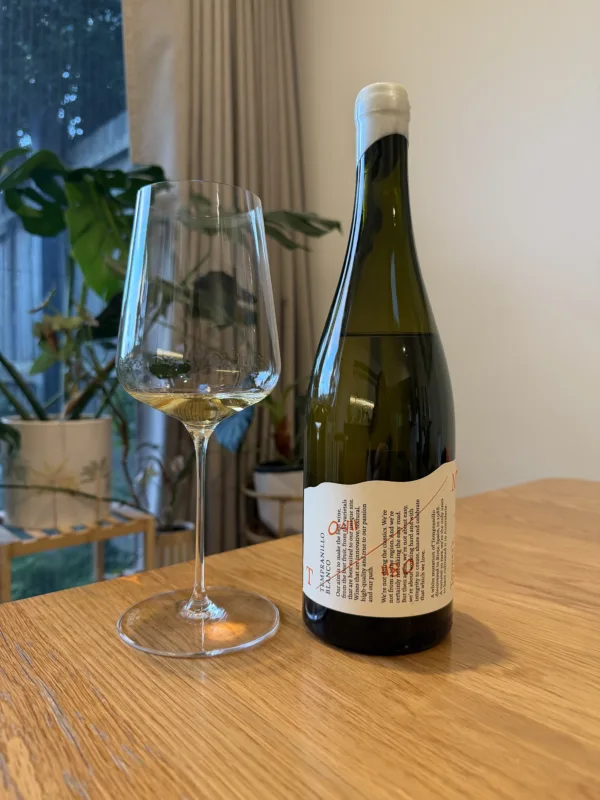
2023 Topper’s Mountain Keeper Tempranillo Blanco
$47.00
Tempranillo Blanco was a completely new experience for both of us. While it wasn’t a style Trent would naturally reach for, this bottle comes from pioneering vignerons Mark Kirkby and Jan Taborsky, so we were genuinely curious to see how it would show.
In the glass, it’s pale yellow, with aromas of dried peach and dried apricot. The palate is linear and focused, with low to medium acidity and a subtle pithy grip reminiscent of pomelo skin on the finish. It’s a genuinely interesting, textural white that invites conversation.
Given it’s the only commercial Australian Tempranillo Blanco, there’s nowhere else quite like it. Those dried stone fruit characters and pithy finish make it a natural match for roast chicken with a citrus glaze, crispy pork belly or a Vietnamese herb salad with nuoc cham. A semi-hard goat’s cheese would also be a great pairing.
Haven’t tried Tempranillo Blanco before? If you’re looking to surprise your guests at your next dinner party, this Australian Tempranillo Blanco is sure to spark conversation. While it wasn’t Trent’s personal favourite, we believe it deserves a place in this month’s reviews for its pioneering story, distinctive character and willingness to push boundaries. We’re looking forward to exploring more of Topper’s Mountain’s range, so stay tuned.
About Topper’s Mountain
Topper’s Mountain has never followed the crowd. Perched more than 900 metres above sea level in New England, New South Wales, the family-owned winery has built its reputation exploring rare grape varieties that thrive in its cool-climate vineyard. Rather than chasing familiar styles, the team embraces innovation and curiosity, producing small-batch wines that express both place and possibility. Their pioneering spirit has made Topper’s Mountain one of Australia’s most distinctive wineries.
2023 Tempranillo Blanco
The 2023 Tempranillo Blanco marks a milestone for Australian wine. Topper’s Mountain is the country’s only commercial producer of this rare white mutation of Tempranillo, first discovered in Spain’s Rioja region in 1988. The grapes were whole-bunch pressed into Austrian oak barrels, with 30% new oak, before undergoing wild fermentation. Full malolactic fermentation followed, creating a wine with texture, complexity and remarkable individuality.